

Overlanding aligns with 2026 travel trends
Travel is changing—fast. And according to the BBC’s new report Seven Travel Trends That Will Define 2026, (and many similar posts) the shift isn’t small; it’s seismic. Across every data source—hotels, trend forecasters, and behavioral experts—travelers are pushing away from noise, crowds, decision fatigue, and one-size-fits-all experiences. In their place: quiet, personalization, flexibility, deeper meaning, and the open road.
If you spend your weekends exploring forest service roads, sleeping under the stars, or dialing in your rig one piece of gear at a time, none of this is surprising.
Overlanding isn’t just aligned with 2026’s travel trends.
It embodies them.
Below is how each trend maps almost perfectly onto the culture and practice of vehicle-based adventure travel—and why overlanding is positioned for massive continued growth.
1. Quiet Over Everything — The Quietcation Arrives

Travelers are embracing “quietcations”—restorative getaways built around silence, stillness, and relief from digital overload. Destinations are even ranking sites by decibel levels.
Overlanding has lived in this space for years.
When you guide your rig down a gravel forest road, lose cell service, and let the world fall away, you’re practicing the very thing travelers are now seeking. The difference is simple: you don’t need to rent a curated “quiet cabin.” You choose your own.
Quiet becomes part of the journey itself.
2. Gen AI Over Admin — Technology Removes the Barriers

AI is reducing friction—trip planning, translation, and logistics are getting easier for travelers. The article points out that more people are relying on these tools to streamline the mental load of travel.
Vehicle-dependant adventure travel benefits from this shift dramatically.
Modern mapping tools (onX, Gaia GPS, Revere, and more) use algorithmic routing, hazard prompts, weather overlays, and waypoint intelligence to make off-grid travel more accessible. The intimidation factor that once defined overlanding is fading. For newcomers, this lowers the barrier to entry in a profound way.
Technology isn’t replacing adventure—it’s empowering it.
3. Trust Over Choice — Curated Simplicity Meets Deep Mechanical Confidence
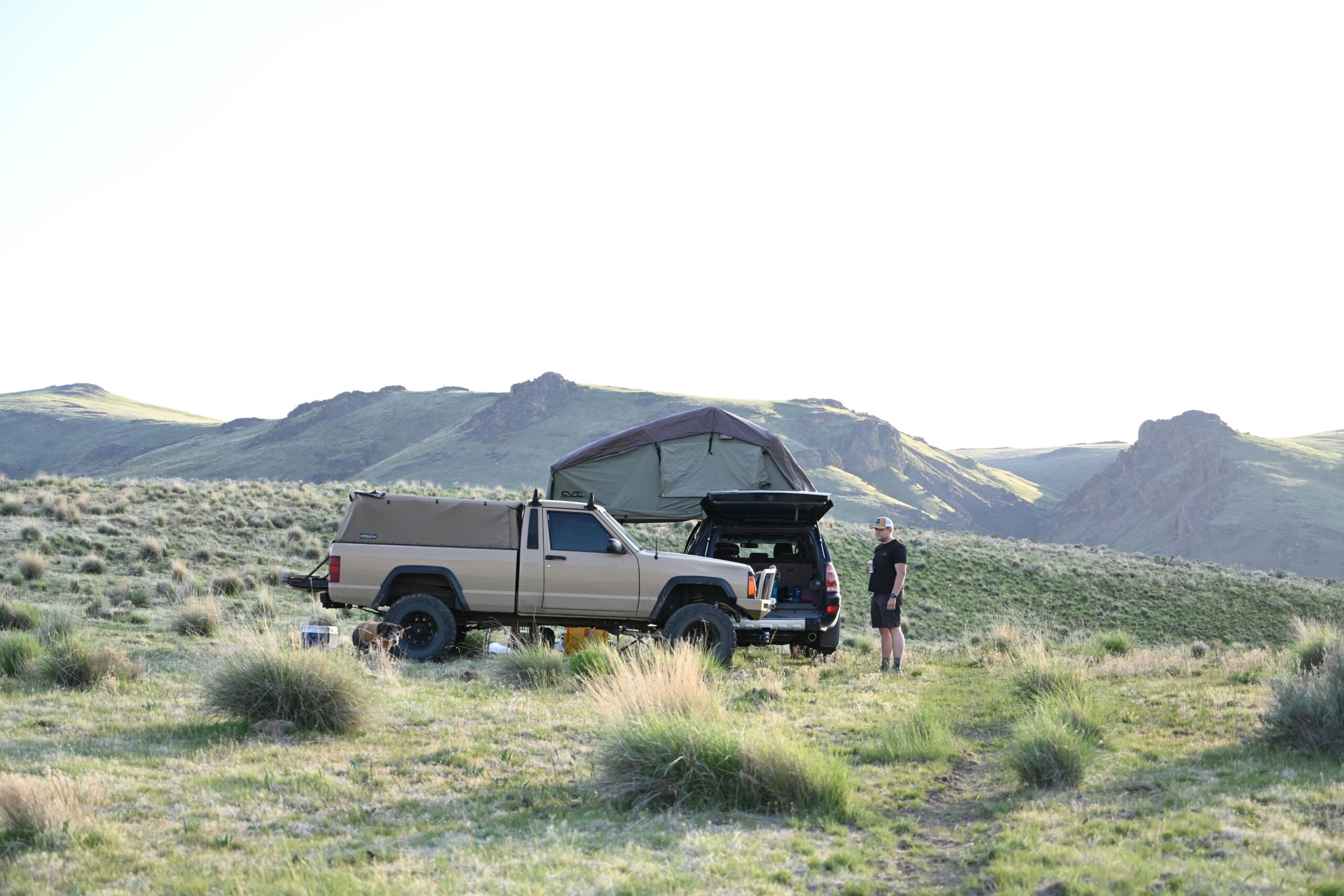
People are exhausted by choice. Mystery itineraries and decision-free trips are gaining traction as travelers look for fewer decisions, not more.
Overlanding fits this emotionally—but with an important twist.
Many overlanders build their trips from curated GPX routes, established loops, and proven regional trails. You follow a planned path, simplify decision-making, and let the route take you. It’s curated but not scripted.
But the deeper alignment is trust.
Overlanders trust their rigs.
And that trust is earned.
You’ve spent years—and a fair chunk of your paycheck—dialing in your build.
You know how your suspension feels on washboard.
You know your tire pressures by instinct.
You know the sounds your rig should make, and the ones that mean “pull over.”
Trust is the bedrock of overlanding. It’s psychological security shaped by hands-on work. Modern travelers are craving this very sensation—confidence, clarity, and escape from overthinking.
Overlanding delivers it in a way no resort ever can.
4. Roads Over Runways — The Great Road Trip Renaissance

Road trips are surging again. The BBC cites cost savings, flexibility, and the rediscovery of freedom as major forces behind the shift.
Overlanding doesn’t just participate in this trend—it expands it.
This isn’t a highway tour with gas-station snacks and hotel stops. Overlanding goes beyond the pavement and into wild, authentic terrain where freedom scales upward with every mile.
As flight prices rise and travelers seek more control over their journeys, overlanding becomes the natural evolution of the American road trip.
5. Ultra-Personalized Over One-Size-Fits-All

Travelers are rejecting mass-market experiences in favor of hyper-specific, emotionally resonant trips—retreats for grief, divorce, menopause, hobbies, identity, purpose.
Overlanding is hyper-personal by nature.
No two rigs are alike.
No two routes are the same.
No two camps feel identical.
You can plan trips around fishing, hiking, food, culture, photography, solitude, faith, history, healing, or simple wonder. Overlanding thrives on customization—the rig, the route, the pace, the purpose.
Where the travel industry is trying to engineer personalization, overlanders have been living it instinctively.
6. Off-Grid Over Tried-and-Tested — The Anti-Instagram Movement

Travelers are abandoning over-filtered, overcrowded hotspots for lesser-visited places with a strong sense of place. The BBC notes that people want authenticity over aesthetic perfection.
This is the beating heart of overlanding.
Remote hollows. Wide plateaus. Forest roads with grass grown in the center. Primitive campsites that don’t appear in any tourism brochure. Places that don’t care about your Instagram grid.
Overlanding’s off-grid roots aren’t a trend—they’re the lifestyle that modern travelers are now chasing.
7. Culture Over Hedonism — Travel With Depth, Not Distraction

The BBC points to the rise of literary travel, “set-jetting,” and journeys centered around story, meaning, and cultural immersion.
Overlanding excels here too.
Your vehicle becomes the doorway into small towns, historical markers, music heritage sites, forgotten backroads, old trade routes, scenic byways, and places where history lingers in the air. Instead of being chauffeured through culture, you drive into it—slowly, deliberately, on your own terms.
Meaning becomes part of the mileage.
Conclusion — The Travel World Is Catching Up to What Overlanders Already Know

Across all seven trends—quiet, tech-enabled ease, psychological trust, the road-trip resurgence, personalization, off-grid authenticity, and culturally grounded journeys—overlanding doesn’t just fit the 2026 landscape.
It is the landscape.
The world of mainstream travel is waking up to values overlanders have championed for years: freedom, intentionality, connection, and the simple power of stepping away from the noise.
As the world grows louder, more chaotic, and more algorithmically curated, the road unpaved becomes the most inviting path forward.
Here’s to the road unpaved! – Doug
Most Viewed Posts
- Jeep Gladiator Tire Guide: Stock Sizes, Upsizing Options, and What You Need to Know
- Best Jeep Gladiator Tire Pressure for MPG & Tire Life
- Jeep Finally Gives the Gladiator a V8: Here’s Why It Matters
- Overland Southeast: Trails Near Bases & Bigfoot Hotspots
- Alabama Trails, Routes, and Overland Destinations