
Tired Foxes or Fresh Lift? The Jeep Gladiator Mojave Suspension Decision
My 2021 Jeep Gladiator Mojave is no longer a low-mileage garage queen. It has crossed into that honest, well-earned territory where the odometer tells a story. At around 120,000 miles, the truck still looks good, still drives well, and still does what I ask it to do. But every rig eventually gets to the point where the factory parts start asking for retirement.
That is where I am with the suspension.
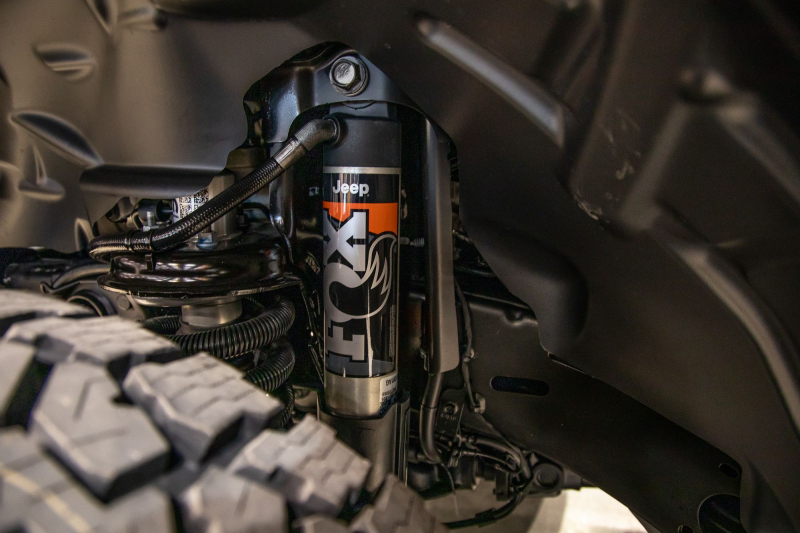
The Mojave comes from Jeep with a very specific identity. It is not just a Gladiator with a decal package. The Mojave was built as Jeep’s desert-rated JT, with Fox 2.5-inch internal bypass shocks, hydraulic jounce bumpers, reinforced frame areas, and a suspension tune aimed more at speed, washboards, rough dirt, and control than crawling slowly over boulders.
That factory setup is one of the things that makes the Mojave special.
But special parts are still wear parts.
So the question becomes pretty simple:
When the factory Mojave suspension gets tired, do you replace it with equivalent OEM-style parts, or do you use that moment to spec the truck more toward overlanding with a mild lift, better load control, and maybe save a little money along the way?
That is the crossroads.
The Current Situation: A High-Mileage Mojave on 35s
My Gladiator is already lightly built in the way a real-world weekend rig tends to be built. It has steel bumpers front and rear, a winch, 35-inch tires, camping gear, recovery gear, kitchen boxes, tools, fridge, power station, and a light-weight rooftop tent on a DIY bed rack..
In other words, it is not a mall crawler pretending to be heavy. It is actually carrying stuff.
That matters.
A suspension that felt perfect when the truck was new and mostly empty may feel a little under-sprung after years of added weight, trail use, highway miles, and loaded weekend trips. Shocks wear down. Springs settle. Bushings age. Steering components loosen up. The whole rig can start to feel a little less sharp, even if nothing is technically “broken.”
So this is not just about lift height.
It is about restoring control and dampening on the bumps.
It is about keeping the Mojave personality while making the truck better suited to how I actually use it now.

Option 1: Replace with OEM Mojave-Equivalent Parts
The purist answer is simple: keep the Mojave a Mojave.
That means replacing the tired factory Fox suspension with equivalent Mojave-spec components. The factory Fox 2.5 internal bypass shocks are a major part of the Mojave package, and keeping them preserves the original engineering intent of the truck.
Pros
The biggest advantage is that the truck stays true to its factory design. The Mojave suspension was tuned by people who knew what they were doing. It rides well, handles rough dirt roads beautifully, and keeps the truck composed at speed.
There is also something to be said for keeping a trim-specific vehicle trim-specific. A Mojave with the original-style Mojave suspension still feels like a Mojave. That may matter for long-term value, resale, and overall identity.
It is also the least complicated path from a geometry standpoint. No major lift means fewer concerns about control arm angles, driveshaft angles, brake lines, track bars, caster correction, or alignment headaches.
Cons
The downside is cost.
OEM Mojave Fox shocks are not cheap. Depending on source, availability, and whether you are buying individual Mopar parts, take-offs, or aftermarket Fox equivalents, replacing all four shocks can easily move into the $1,400–$2,800 range before labor. Pricing moves around, but that is the neighborhood.
And after spending that money, the truck is basically back to where it started.
That may be exactly what some owners want. But for an overlanding build, it may not solve the bigger issue: added weight.
Factory Mojave suspension is good. Very good. But it was not specifically built around my exact setup: steel bumpers, winch, camping load, fridge, recovery gear, rooftop tent rotation, and 35-inch tires.
So the OEM-equivalent route is clean, but it may not be the best value if the truck’s job has changed.
Estimated Cost
Parts: $1,400–$2,800+
Labor/alignment: $400–$900
Likely total: $1,800–$3,700
Best for: the owner who wants to preserve the Mojave factory feel and does not need additional lift or load correction.
Option 2: Rebuild or Service the Existing Fox Shocks
This is the middle-road option that a lot of people forget.
Higher-end Fox shocks can often be rebuilt or serviced instead of replaced outright. That can be a smart move if the shocks are not physically damaged and the goal is simply to restore damping performance.
Pros
This keeps the factory Mojave hardware and may cost less than buying brand-new replacements. It also allows the truck to retain the Mojave-specific ride character.
For someone who likes the way the truck rides now but knows the shocks are tired, a rebuild can make a lot of sense.
Cons
There is downtime. The shocks typically have to come off the vehicle and be sent out or serviced by a qualified shop. That means the Jeep is either down for a period of time or you need temporary replacement shocks.
Also, rebuilding the shocks does not solve spring sag or added load. The dampers may come back fresh, but if the truck is sitting low under weight, still nosediving, or riding heavy in the rear, you have only fixed part of the problem.
Estimated Cost
Shock service/rebuild: roughly $100–$250+ per shock, depending on service level
Removal/reinstall/alignment: $400–$900
Likely total: $800–$1,800+
Best for: keeping the Mojave feel while spending less than full replacement, assuming the shocks are rebuildable and the springs still suit the vehicle.
Option 3: Add a Mojave-Specific Spacer Lift and Keep the Fox Shocks
This is the budget-friendly “don’t throw away the good stuff” option.
The Mojave already has good shocks. So instead of replacing them, one approach is to add a Mojave-specific spacer lift, such as a 2-inch kit designed to retain the factory Mojave suspension components.
AEV, for example, offers a 2-inch Mojave spacer lift that is specifically built around keeping the Mojave’s factory suspension hardware. AEV describes it as a way to gain clearance while retaining the performance-tuned OEM Mojave components, and notes that it can support up to 37-inch tires with the right wheels and trimming. (American Expedition Vehicles)
Pros
This is one of the cheapest ways to gain height and tire clearance while keeping the expensive Mojave Fox shocks.
It also makes sense if the shocks are not completely worn out yet. You can add stance, clearance, and a little more room for the tires without tearing out the soul of the Mojave package.
For a Gladiator already on 35s, a mild spacer setup can help the truck look and function a little better without going too far.
Cons
Spacer lifts do not magically increase suspension performance. They add height. They do not necessarily add better spring rate, better load handling, or better damping.
If the issue is truly worn shocks, a spacer lift does not fix that. It just puts tired shocks under a taller truck.
And if the Jeep is carrying more weight than stock, spacers do not solve the spring-rate problem either. The truck may sit taller, but it can still feel under-supported.
Estimated Cost
Parts: $500–$900
Labor/alignment: $400–$900
Likely total: $900–$1,800
Best for: keeping Mojave components, adding mild height, improving stance, and controlling cost — but only if the existing shocks still have life left.

Option 4: Move to a True Overland Suspension System
This is where the conversation gets more serious.
A true overland suspension setup is less about “how tall can I make it?” and more about how the truck behaves under real-world load. The goal is to improve ride quality, control, articulation, and load support while keeping the vehicle stable on the highway and predictable on rough roads.
This could mean a 2.5-inch suspension system from companies like Clayton, MetalCloak, AEV, EVO, Teraflex, or similar brands. For example, Clayton’s 2.5-inch Overland Plus kit for the Gladiator is listed around $2,800–$3,200 depending on configuration, while MetalCloak’s Mojave-focused systems can move into the $3,400+ range without shocks depending on setup. (ExtremeTerrain.com)
Some Mojave-specific kits are designed to reuse factory Mojave shocks. MetalCloak, for example, offers Mojave suspension systems with the option to use factory Mojave shocks. (Metalcloak)
Pros
This is the most purposeful overlanding route.
A good overland suspension can better account for added weight, improve loaded ride quality, and create room for future upgrades. It can also correct geometry more completely than a simple spacer lift.
Done right, this is where the truck stops feeling like a factory vehicle with stuff bolted to it and starts feeling like a complete travel rig.
It also gives you room to make the Jeep match your actual use: highway miles, gravel roads, forest service routes, light-to-moderate trails, camping weight, and occasional harder use.
Cons
Cost climbs fast.
Once you move into a real suspension system, the kit itself is only part of the bill. You may also need geometry correction, track bars, control arms, bump stops, brake-line brackets, driveshaft considerations, wheels/tires, and a good alignment.
And there is such a thing as overbuilding. A 3.5-inch lift may look great, but it can add complexity, weight, wind resistance, driveline angles, and daily-driver compromises.
For a Gladiator that sees more Southern backroads, WMA roads, gravel, camping, and road trips than hardcore crawling, the sweet spot is probably not huge lift. It is probably a well-sorted 1.5–2.5-inch overland-focused setup.
Estimated Cost
Parts: $1,800–$3,800+
Labor/alignment: $800–$1,500+
Likely total: $2,600–$5,300+
Best for: the owner who wants to build the truck around real loaded travel rather than simply restore the stock setup.
Read ABout Tire upgrade options
Option 5: Use a JT Mopar Lift Kit Instead of Mojave OEM Replacement
This is the tempting route because Mopar offers Gladiator lift kits, and the pricing can look attractive compared to replacing Mojave-specific parts individually. Current Mopar/JPP Gladiator lift kits are commonly listed around $1,700–$2,000, depending on source and configuration. (parts.allmoparparts.com)
But this needs a giant caution flag.
A standard JT Mopar lift is not the right kit for a JT Gladiator Mojave. The Mojave has different rear suspension needs, wheelbase, payload considerations, and geometry. Even with a JT Mopar kit, Mojave owners need to think carefully before replacing the factory Mojave Fox 2.5 setup with a more generic lift-kit shock package.
Pros
A Mopar lift keeps things in the Jeep family. It can be a clean, dealership-friendly option and may offer a nice stance with room for larger tires.
Compared to buying Mojave shocks individually, it can look like a lot of parts for the money.
Cons
For a Mojave, the tradeoff is identity.
You may be removing part of what made the Mojave special in the first place. The truck may gain lift but lose some of the factory desert-rated ride character.
Not all Mopar lift kits are equal across engines, trims, and model years. You need the correct JT-specific kit, and you need to confirm compatibility before buying.
Estimated Cost
Parts: $1,700–$2,000
Labor/alignment: $700–$1,200
Likely total: $2,400–$3,200
Best for: non-Mojave Gladiator owners, or Mojave owners who understand what they may be giving up and still want a Jeep Performance Parts-style lift.

My Lean: OEM+ Reset, Not a Big Lift
For my use case, I do not think the answer is a tall lift.
This truck is not being built to win a flex competition. It is a high-mileage, real-world, Southern overland rig. It needs to run highway miles comfortably, carry gear, handle gravel and forest roads, explore WMAs, cross shallow water, pull into camp, and get home without drama.
That points me toward a practical middle ground:
A mild, no-fuss suspension reset with a little lift, better load control, and a focus on reliability over complexity.
Not a spacer.
Not a big kit.
Not a compromise.
A reset.
What That Actually Looks Like
For me, that looks like:
- Replacing worn shocks with Teraflex Falcon SP2 2.1 Monotube Shocks
- Replacing tired springs with new coils matched to the weight I actually carry (most likely TeraFlex JT 1.5″ front and rear)
- Keeping geometry simple and predictable
- Letting any slight lift come naturally from fresh components, not stacked parts
Just the right parts, doing the right job.
Why This Direction Wins
At this mileage, the question is not “lift or no lift.” It is: Is the suspension still doing its job?
Springs lose rate.
Shocks lose control.
Added weight changes everything.
Trying to solve that with partial upgrades—spacers, take-offs, or pieced-together solutions—just delays the real fix.
This approach handles all of it:
- Restores damping
- Restores spring rate
- Improves load handling
- Adds a small, useful amount of lift
All in one move.
What About Height?
On a Mojave, this kind of setup typically nets:
- ~0.75–1.25” in the front
- ~0.5–1.0” in the rear
That is not a “lift kit.” That is a correction plus refinement.
The truck ends up:
- Slightly more level
- Better supported
- More composed
Exactly where it should have been all along.
The Real Cost Question
Here is an honest cost comparison:
| Route | Estimated Total Cost | What You Get |
|---|---|---|
| Rebuild Mojave Fox shocks | $800–$1,800+ | Restores damping, keeps Mojave feel |
| Mojave spacer lift | $900–$1,800 | Adds height, retains worn components |
| OEM Mojave-equivalent replacement | $1,800–$3,700 | Resets factory feel, same limitations |
| OEM+ reset (Falcon + matched springs) | $750–$1,200 | Full system refresh, improved control, no complexity |
| Full overland suspension system | $2,600–$5,300+ | Maximum capability, highest cost |
The cheapest option is not always the best value. But neither is the most expensive. The best value is the one that actually fixes the problem without creating new ones.
Final Thought
The Mojave is already one of the best-riding Gladiators Jeep ever built. That makes the suspension decision harder, not easier. Replacing everything with factory-equivalent parts preserves what Jeep engineered. Going full overland system may push the truck beyond what it really needs. The trick is not to erase the Mojave’s strengths while trying to improve it. For me, the smartest path is not “restore it exactly” or “build it bigger.”
It is this:
- Refresh what is worn.
- Add only the lift I need.
- Support the weight I actually carry.
- Keep the truck stable, simple, and dependable.
Because a good overland suspension is not about standing taller in the parking lot. It is about driving better when the pavement ends.
Here’s to the road unpaved! – Doug
Most Viewed Posts
- Jeep Gladiator Tire Guide: Stock Sizes, Upsizing Options, and What You Need to Know
- Best Jeep Gladiator Tire Pressure for MPG & Tire Life
- Jeep Finally Gives the Gladiator a V8: Here’s Why It Matters
- Overland Southeast: Trails Near Bases & Bigfoot Hotspots
- Alabama Trails, Routes, and Overland Destinations